

Should you check engine oil level when the engine is cold, or after running it for a while? Pick the timing that delivers the most accurate reading. Let’s break down easy tips to get precise oil measurements, and learn why check engine oil when warm matters for reliable results.
Why Engine Temperature Matters When Checking Oil?
Oil temperature changes how much oil there is and where it stays inside the engine. While the machine runs, oil won’t stay in the oil pan. It flows all around the engine to lubricate, cool and protect key parts such as bearings, pistons and turbochargers. Two main changes take place here.
- Plenty of oil moves out of the oil pan and spreads across the whole engine.
- Also, oil expands when heated. Heavy-duty diesel engines can heat oil above 93°C, and hot oil takes up more space.
Don’t check oil level right after you turn off the engine. Most oil still stays in upper parts, so you’ll get an incorrectly low reading.
If you check when the engine is fully cold after sitting overnight, oil shrinks back. Adding oil to the full line at this time will cause overfilling once the engine warms up again.
When Is the Best Time to Check Your Oil?
People have different ways to check oil, but most off-road equipment makers stick to one standard method. Always refer to your operation manual first, as engine specs vary by brand. For heavy-duty diesel engines, the common and reliable way is to check oil level with a warm engine.
Why Check Engine Oil When Warm?
Many people think cold engine oil checks make sense since all oil flows back to the pan. Still, this way ignores oil thermal expansion. Dipstick level marks are set to match oil volume at normal working temperature.
Warm engine oil checks work far better for your equipment for these reasons.
- Matches real running conditions. Engines always work hot. Checking warm oil shows the actual lubrication state under load, and measures the proper expanded oil volume designed for operation.
- Avoids dangerous overfilling, which matters most. If you fill oil up to the full mark on a cold engine, expanding hot oil will push the level too high. Too much oil harms diesel engines. The rotating crank whips oil into foam, making it hard for the oil pump to circulate. Poor lubrication causes overheating and serious internal damage.
- Delivers steady, precise readings. Warm oil runs thinner and flows back to the oil pan faster and more steadily than thick cold oil. Simply turn off the engine and wait 15 to 20 minutes before checking. Most oil drains back while still warm and expanded, giving you consistent trustworthy results.
Warm oil checking measures usable oil volume under real working conditions, and this is the official recommended way to safeguard your engine. Cold checks only show total oil stored in the pan, while warm checks confirm you have the right oil amount for normal operation.
How to Check Oil Level?
Stick to standard steps to get an accurate oil check result.
- First, park the machine on firm, flat ground. Even a small tilt will skew the oil level reading. Set the parking brake, put all tools down and turn off the engine.
- Then wait for oil to settle down. Normally wait 15 to 20 minutes as suggested in the manual. This lets oil flow back fully into the oil pan.
- Find the oil dipstick and pull it out. Wipe off dirt around the opening first to keep dirt out of the engine.
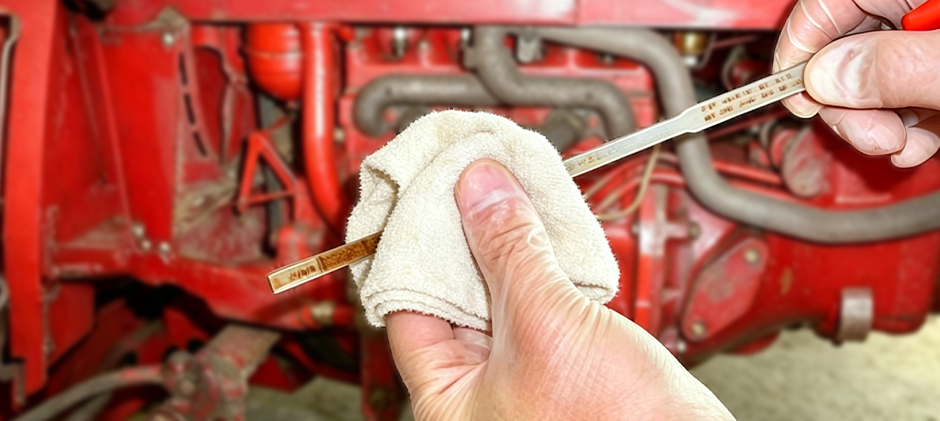
- Wipe the dipstick thoroughly with a clean cloth, then push it all the way back in place.
- Take it out again to check the oil level. The oil line needs to sit between the full and low marks.
- Also check oil quality. Normal oil looks brown or black. Milky oil means coolant leaks inside the engine and needs urgent repair. Metal bits in the oil point to serious engine wear issues.
Common Mistakes When Checking Oil
Here are common oil check mistakes to avoid on off-road equipment.
- Checking oil on sloped ground: Readings on uneven surfaces are inaccurate. You may end up adding too much or too little oil by mistake.
- Not waiting long enough after shutdown: Oil still stays in upper engine parts and turbo right after turning off. Quick checks will show falsely low levels. Always wait 15 to 20 minutes as advised.
- Overfilling oil using cold engine readings: Filling oil to full mark when cold causes trouble. Hot expanded oil leads to foam formation, seal leaks and poor lubrication. Always go with warm engine readings.
- Neglecting the official operation manual: Warm oil check works for most heavy machines, yet a few models follow different rules. Always refer to your manual for the correct steps.
Final Thought
Check oil when the engine is warm. Let it reach operating temperature, then leave it idle for 15 to 20 minutes. This gives the most accurate and safe reading. It accounts for oil thermal expansion and matches the dipstick calibration standard set by manufacturers.
FridayParts keeps abundant parts in stock. We supply durable components for all major heavy equipment brands, helping you keep machines running perfectly at low cost.
