

Winter is coming, and downtime is not an option for your property or business. Asking what’s the best snow blower is not just about the brand name. It is about picking the right tool for your ground, your snow, and your workload.
If you own off-road equipment—like a tractor, skid steer, or compact loader—you may need more than a small walk-behind machine. This guide explains the main types and when each one makes sense, in simple terms.
What Are the Main Types?
Selecting the right equipment starts with understanding how different stages handle snow accumulation.
Single-Stage Snow Blowers
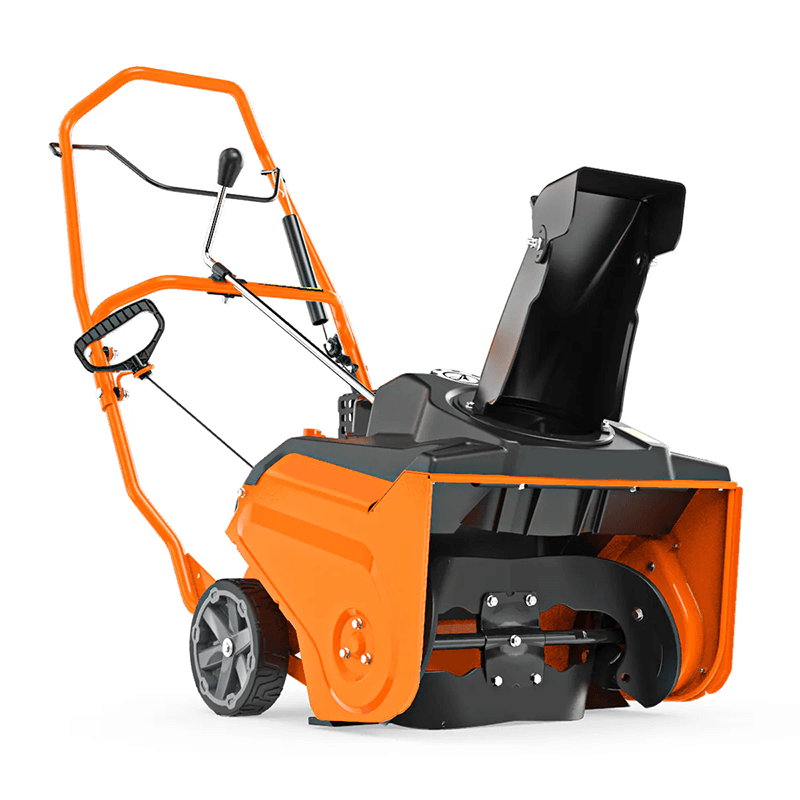
Single-stage blowers are made for light snow on smooth, paved ground. One spinning auger pulls in snow and throws it out the chute in one step.
- Good for: sidewalks, small paved driveways
- Best snow: light and fluffy, usually under about 8 inches
- Not good for: gravel or rocky ground (the auger touches the ground and can grab stones)
If you have gravel, this type can turn into a rock launcher.
Two-Stage Snow Blowers
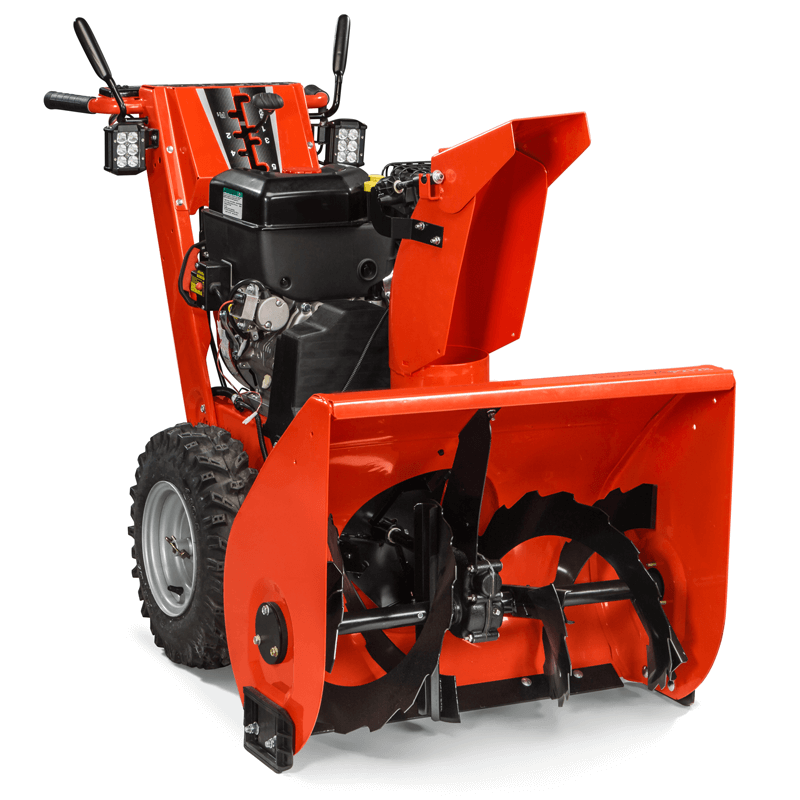
Two-stage snow blowers are a strong choice for many rural properties. They use two parts:
- an auger to break up and move snow
- An impeller fan to throw the snow out
Because the auger sits higher, it usually does not scrape the ground, so it is safer on gravel and uneven surfaces.
- Good for: gravel driveways, long lanes, packed snow
- Handles: deeper snow and wet, heavy snow better than single-stage
- Less clogging: because the impeller throws snow with more force
“The best snow blower is the one that fits your terrain. If you have gravel, a two-stage unit is mandatory to avoid turning your machine into a rock thrower.”
Three-Stage Snow Blowers
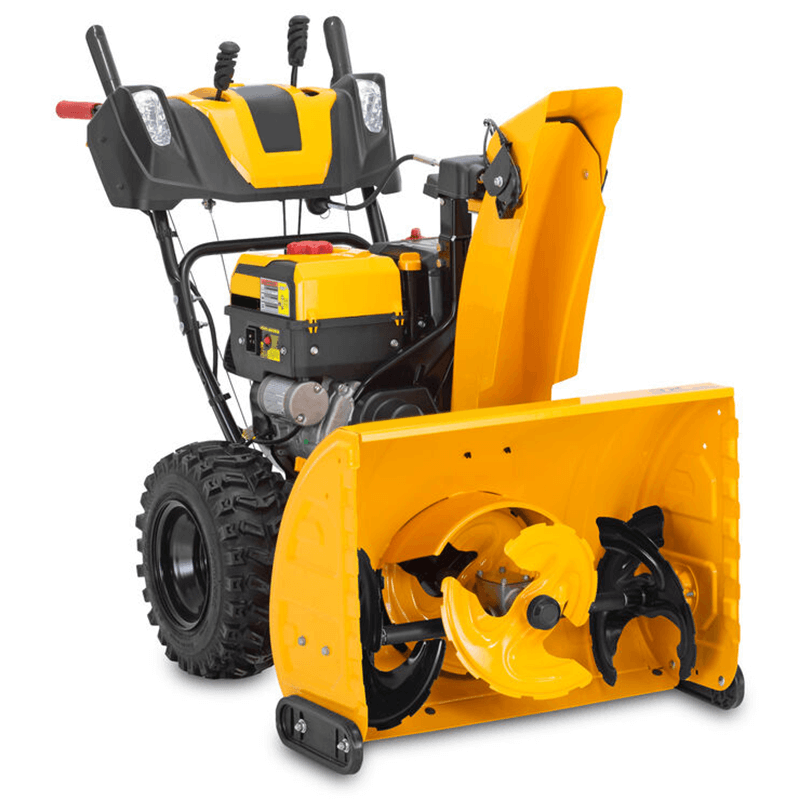
Three-stage snow blowers are for very hard jobs. They add a fast “accelerator” at the front that helps chew through:
- icy snow
- packed snow
- big plow piles
This extra part can feed snow into the machine faster, so you may clear areas quicker than with a two-stage.
- Good for: heavy storms, end-of-driveway piles, hard-packed snow
- Helpful when: you often deal with snowbanks left by road plows
Should You Choose a Tractor or Skid Steer Attachment?
For off-road machinery owners, a walk-behind unit might not be enough.
Tractor-Mounted Snow Blowers
Tractor-mounted blowers use the power of your tractor’s engine. Most connect to a 3-point hitch and run from the rear PTO (Power Take-Off).
- Big clearing width: often about 50 to 84 inches
- Good for: long driveways, farmyards, private roads
- Makes sense if: you already own a tractor and want one tool that clears a lot of snow. (See our guide on the Best Tractor for Small Farm in 2025 if you are looking to upgrade.
A PTO blower can be a practical option because you are using the machine you already maintain.
Skid Steer Hydraulic Blowers
Skid steer blowers run on hydraulic power. Many are mounted on the front, so you can see the work area clearly.
- Good for: parking lots, long roads, commercial work
- Strong point: visibility and control
- Important check: make sure your skid steer has enough hydraulic flow (GPM) for the blower. If you are new to this machinery, check out the Top 5 Snow Removal Mistakes Every Skid Steer Beginner Makes.
If your skid steer does not meet the GPM requirement, the blower may feel weak or run poorly.
4 Key Factors to Choose a Snow Blower
1. What Is Your Terrain Type?
Your ground decides what kind of blower you need.
- Paved asphalt or concrete: any type can work
- Gravel, dirt, uneven ground: choose a two-stage or three-stage with adjustable skid shoes
Skid shoes lift the housing slightly. This helps stop rocks from getting pulled in and damaging the machine.
2. How Large Is the Clearing Area?
Wider machines clear more snow in fewer passes.
- Small driveway: a 24-inch walk-behind may be enough
- Long rural driveway or farmyard: consider 30 inches or more
- Tractor attachment: choose a width that covers your tractor’s tire tracks
A simple goal: fewer passes = less time outside.
3. What Type of Snow Do You Get?
Not all snow is the same.
- Light powder: easy to move. (Some people also ask, Can I Use A Leaf Blower For Snow?)
- Wet, heavy snow: needs more power and can clog weak machines
For heavy snow areas, look for a machine with enough engine strength (higher CC on gas engines) or strong torque (on electric models). Also, two-stage and three-stage designs usually handle wet snow better.
4. Are Replacement Parts Available?
Even good machines need repairs.
Common wear items include:
- belts
- shear pins
- skid shoes
- scraper bars
- carbs (on gas units that sit all summer)
Before you buy, make sure parts are easy to get for your model. That matters most when a storm hits, and you need a fast fix.
Why Maintenance Is Critical for Performance
Even the most expensive machine will fail without proper care.
Regular maintenance prevents mid-storm failures.
- Check Shear Pins: They are meant to break to protect the gearbox. Keep extras.
- Inspect Belts: Worn belts can slip and reduce throwing distance.
- Fresh Fuel: Old gas is a top reason small engines will not start in winter.
Also, at the start of the season, check bolts, grease points (if your model has them), and make sure the chute turns freely.
Summary
Determining what’s the best snow blower depends on your property and the equipment you already own.
- For light snow on pavement, a single-stage can work
- For gravel driveways and heavy drifts, a two-stage is usually the safer, stronger choice
- For tough plow piles and packed snow, a three-stage can save time
- For large areas, tractor or skid steer attachments can clear faster than walk-behind units. (Also consider comparing Snow Blower Vs. Snow Pusher: Which is Better?)
Once you have made your choice, keep your equipment ready before the next storm. At FridayParts, we stock high-quality replacements to keep your engine running and your augers turning. Shop our extensive selection of snow blower parts today and ensure you are never left stuck in the cold.
