

DPF regeneration keeps the exhaust filter clean, which helps your diesel engine run smoothly. However, many owners find this system confusing, especially when it causes downtime or warning lights.
Remember: regeneration = high heat burns soot away, turning it into harmless gas.
This simple guide explains what DPF regeneration is, why it matters, and how to perform it to keep your off-road machine running at its best.
Why is Regeneration Necessary?
Regeneration is the DPF’s way to clean itself.
It heats the filter to very high temperatures—sometimes over 1100°F (600°C)—so soot burns away.
If the DPF does not regenerate, it will clog.
A clogged DPF blocks exhaust flow, so the engine cannot push air out properly.
Backpressure causes simple problems that can become expensive ones: lower power, higher fuel use, and possible damage to turbo and exhaust parts.
The earlier you react, the easier it is to fix.
“It’s like cleaning an oven—you turn up the heat to burn off the buildup.” — common mechanic explanation
How Does DPF Regeneration Work?
Your machine can clean its DPF in three ways: passive, active, and forced regeneration.
Which one happens depends on how hot the exhaust gets and how full the filter is.
Think of it like this: heavy work makes heat, and heat makes cleaning easier.
Light work and short run time often lead to more intervention.
1. Passive Regeneration
Passive regeneration means the machine cleans the DPF while you work.
When the engine runs hot for a long time (heavy load, higher RPM), the exhaust heat burns soot naturally.
You don’t need to press anything. This is the easiest type because it happens in the background.
Off-road machines doing hard jobs often benefit the most.
Simple rule: the harder the engine works, the easier passive regen becomes.
2. Active Regeneration
Active regeneration means the ECU helps raise exhaust temperature to clean the DPF.
If passive regen is not happening enough, the ECU detects soot buildup and starts a cleaning cycle.
The ECU injects a small amount of extra fuel into the exhaust stream. This fuel reacts with a catalyst upstream of the DPF, generating the intense heat needed to burn off the soot.
The goal is always the same: get hot enough to burn soot.
You may notice normal signs:
- a louder or deeper exhaust sound
- a hot/burning smell
- a regeneration light on the dashboard
These changes usually mean the system is doing its job.
Good reminder: a regen light often means “cleaning,” not “broken.”
“Sound and smell changes can be normal during regen.” — common operator tip
3. Forced (Manual) Regeneration
Forced regeneration means the filter is too full and needs a partial cleaning.
This often happens when the machine does short, light work and cannot finish normal regen cycles.
Forced regen is usually done with the machine parked.
An operator or technician starts it using a button, menu, or diagnostic tool.
It takes time, often 30 minutes or more, and you can’t use the machine during the process.
Easy comparison: forced regen is a deep clean after too many short trips.
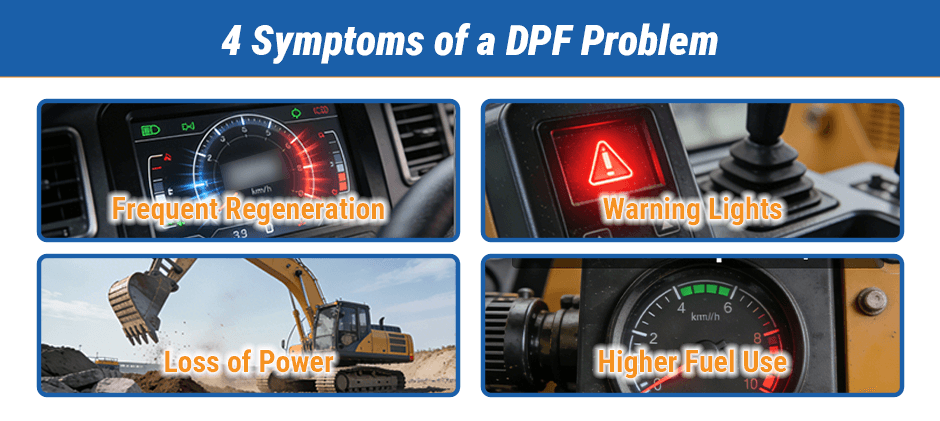
4 Symptoms of a DPF Problem
When the DPF system isn’t working well, the machine gives clear hints.
- Frequent Regeneration: Frequent regens can mean more than soot—it can also mean ash buildup. Ash does not burn away and slowly fills the DPF over time.
- Warning Lights: A DPF light or check-engine light means the system is struggling. Simple rule: don’t ignore it—early fixes are cheaper.
- Loss of Power: A clogged DPF restricts exhaust flow. That restriction makes the engine feel weak, slow, or “held back.”
- Higher Fuel Use: Regeneration uses extra fuel to create heat. If regen happens too often, fuel costs rise.
“A blocked DPF is like trying to breathe through a clogged mask.” — mechanic-style explanation
3 Tips for Better DPF Health
You don’t need to know every sensor and setting.
Do these three things to cut downtime and extend DPF life.
1. Let Regeneration Finish
When regeneration starts, avoid shutting the machine down early.
Stopping halfway leaves soot behind and makes the next regen harder.
If you interrupt regen too often, the soot load can climb until you need forced regen or service.
Clear habit: let the cycle complete whenever possible.
2. Work the Machine Under Load
A proper load helps keep exhaust temperature high enough for passive cleaning and successful active regen.
Avoid long periods of idling.
Also, avoid using an oversized machine for very light tasks for long stretches.
Simple line to remember: heat is the DPF’s best friend.
3. Use the Right Low-Ash Oil
Oil choice matters because some oils create more metal ash. That ash cannot burn off and stays in the DPF permanently.
Use the low-ash oil your manufacturer recommends. Common specs you may see include API CJ-4, CK-4, or FA-4 (follow your equipment manual).
Clear takeaway: right oil = less ash = longer DPF life.
Conclusion
Even with good habits, every DPF will eventually fill with ash that needs professional cleaning or replacement. If warning lights stay on, regen becomes very frequent, or power drops, have the system checked soon. Some owners facing repeated issues consider alternatives, but it’s important to understand the risks of modifications like a DPF delete.
If you’re troubleshooting or replacing parts (like DPF differential pressure sensors, exhaust temperature sensors, gaskets, or DPF-related components), you can look for the correct fitment parts at FridayParts.
