

Water contamination in diesel fuel is not a small issue. It can seriously damage your engine. If water gets into your diesel tank, there are ways to remove it — and there are also simple steps you can take to prevent it from happening again.
Damage Caused by Water
Water in diesel fuel can damage machinery. Modern diesel engines, especially those with High-Pressure Common Rail (HPCR) systems, are sensitive to fuel quality.
- Fuel System Component Failure: Diesel fuel lubricates important parts like your fuel injection pump and injectors. Water has no lubrication at all. When water goes through these parts, it quickly wears them out and scratches the tight metal surfaces.
- Corrosion and Rust: Water in your fuel tank, lines, and injectors causes rust. Those small rust pieces then move through the fuel system, acting like sandpaper. They clog your fuel filters and injector nozzles.
- Microbial Growth: Where water and diesel meet, bacteria, fungi, and algae grow easily. This “diesel bug” makes thick, slimy gunk that keeps clogging your fuel filters. It cuts off fuel to your engine and can make it shut down.
- Reduced Combustion and Power: Water doesn’t burn. When it gets into the combustion chamber, it turns to steam and messes up the burn. So, the machine loses power, has a rough idle, and has bad engine performance.
- Freezing in Cold Weather: In cold weather, water in your fuel lines or filter housing can freeze. Ice crystals block fuel flow completely, so your machine won’t start.
How Does Water Get into Diesel Fuel?
Water often gets in through common ways, especially on rough job sites where off-road machinery works.
Condensation
As fuel level drops, outside air gets into the tank — and that air has moisture. When it cools down at night, warm, moist air inside the tank touches the cold tank walls. Moisture turns into water droplets and sinks to the bottom of the diesel.
Poor Fuel Storage
Think about your fuel storage on-site. Whether it’s a big fixed tank or a mobile fuel bowser, keeping it in good shape is critical.
- Damaged Seals & Caps: Worn gaskets on fuel caps or inspection ports let rainwater and pressure-washer water seep in.
- Corrosion: Old steel tanks can rust from the inside out, making small holes that let groundwater or rain in.
- Physical Damage: Dents or scrapes on the job site can damage the tank and let water in.
Contaminated Fuel Delivery
Sometimes the fuel you get is already bad. From the refinery to your site, there are many chances for contamination. If your supplier’s tanks or trucks are poorly maintained, they can deliver you fuel full of problems.
How to Spot Water in Diesel Fuel?
Your machine will give you clear signs when it’s dealing with water in the fuel.
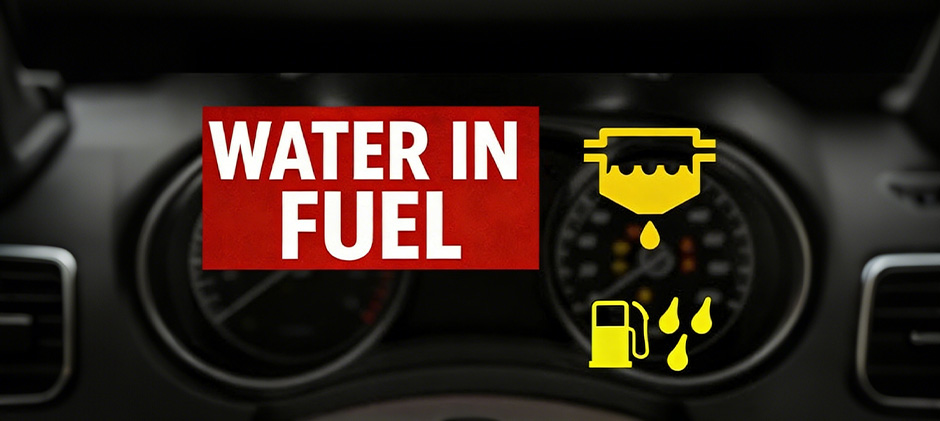
Water-In-Fuel Light On
The water-in-fuel light on your dashboard. It’s linked to a sensor at the bottom of the fuel-water separator. The light comes on when the separator draws in too much water. Please be sure to take this signal seriously.
Rough, Unstable Engine
Water messes up fuel flow. Your engine may idle unevenly and hesitate or jerk when you accelerate.
Lack of Power
Your machine struggles with jobs it used to handle easily, like lifting a full bucket or climbing hills.
Hard to Start
Water in the fuel lines makes the engine hard to start, especially on cold mornings.
Too Much White or Gray Smoke
This is unburnt fuel and steam coming out of the exhaust. It’s a common sign water is ruining the combustion.
Fuel Filters Clogging Too Often
If you’re changing filters way more often than you should, that’s a strong sign of contamination — usually from sludge caused by the diesel bug.
Visual Check
If you suspect water, take a fuel sample from your tank or separator into a clean, clear jar. Let it sit for an hour. Water is heavier than diesel, so it will sink to the bottom — you’ll see a separate layer or cloudy haze at the bottom.
How Do You Remove Water from Diesel Fuel?
So you’ve confirmed you have water in your diesel fuel. The good news is that you can often resolve the issue yourself with a few key procedures.
Drain the Fuel-Water Separator
- Find the fuel-water separator: Consult the operating manual to find the oil-water separator. It usually looks like a fuel filter. Many oil-water separators have a clear bowl-shaped container or a small drain valve at the bottom.
- Drain water: Place a container underneath. Slowly open the drain valve (usually a small knob or plug). The liquid that comes out may be water. It may look cloudy or slightly dirty.
- Stop when you see clean diesel: Continue draining until clean diesel comes out. Once the water is drained, close the valve immediately to avoid losing too much fuel or allowing air to enter the system.
- Prime the system: Some machines require priming after draining to remove air from the lines. If necessary, use a manual oil filling pump.
Use a Fuel Additive (For Small Amounts & Prevention)
If there’s only a small amount of water in the fuel, or you just want to prevent problems, a fuel additive can help. There are two common types:
- Demulsifiers: This is usually the better choice if your machine has a fuel-water separator. A demulsifier helps separate water from diesel. It makes small water droplets join together and sink to the bottom of the tank, so your separator can remove them more easily.
- Biocides: If you’ve got sludge in your filters, that’s the diesel bug; a biocide additive will kill the bacteria and germs in your tank. You’ll probably need to change your fuel filter soon after, because the dead sludge gets loose and can clog it up.
Fuel Polishing (For Contaminated Bulk Tanks)
If your main on-site storage tank is heavily contaminated, no amount of work on the machine itself will solve the root problem. Fuel polishing is a service where a specialized filtration rig is connected to your tank. It circulates the entire volume of fuel through a series of filters and water separators, cleaning the fuel and removing water, sludge, and sediment, leaving you with clean, reliable fuel.
How to Prevent Water in Diesel Fuel?
The best thing is always prevention. Incorporating these simple habits into your daily and weekly routine will significantly reduce the risk of water contamination.
Keep the tank as full as possible: Before finishing work every day, fill up the fuel tank. The fuller the tank, the less air is in it, making condensation less likely to form at night.
Release water regularly: Don’t wait until the water alarm light comes on before handling it. Before starting every day, check the fuel-water separator. If there is water, drain it and it can be done in a few minutes.
Choose a reliable fuel supplier: Try to find a supplier with a good reputation and clean fuel. You can also ask them how they maintain the storage tank and filter the fuel.
Check the fuel tank cap and seals: Check the fuel tank cap and sealing ring of the machine and oil storage tank regularly for aging and cracking. Find the problem and replace it in time; don’t let the water have a chance to get in.
Final Thoughts
Water in diesel fuel can seriously affect engine performance and shorten its lifespan. When you understand where the water comes from, the warning signs, and how to fix it, you can take simple steps to prevent bigger problems.
Whether you need a high-quality fuel-water separator or a new fuel filter, FridayParts offers reliable parts at affordable prices to help keep your machine running and reduce downtime.
