

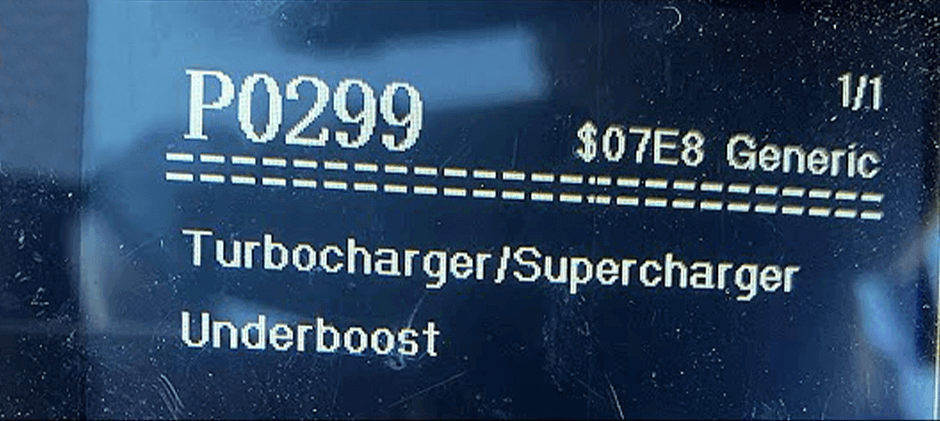
Trouble Code P0299 refers to “Turbocharger or Supercharger Underboost”. P0299 may also be accompanied by several performance and efficiency-related symptoms, and multiple components can cause this trouble code to set. Learn more about this issue and find the correct solutions.
What Does a DTC P0299 Code Mean?
Simply, code P0299 means the turbo is not producing enough boost. ECM found that the turbine was not producing the air pressure it required.
Today’s non-road diesel machinery (excavators, loaders, etc.) relies heavily on turbochargers. Exhaust gas spins the turbine, which drives the compressor to compress fresh air. And pushes dense air into the cylinders. The more air, the more fuel burns. That’s what gives the machine the power to dig, lift, and pull heavy loads.
The ECM detects the boost pressure through a sensor. When the equipment digs soil and climbs hills, ECM will require the boost pressure to reach a certain value. If the sensor detects that the pressure is low and does not meet the standard, the computer will report P0299 and turn on the fault light.
What Are the Symptoms of a P0299 Code?
When the machine is working properly, insufficient boost is not easy to detect at first. Usually the fault light on the instrument panel will come on first, but soon obvious performance problems will appear, directly affecting the work. You may encounter the following situations:
- Power output becomes weaker: Machines become dull and slow to react, especially when working with loads. The hills and heavy objects that were easy to climb before are now very difficult.
- Black smoke coming out of the exhaust pipe: The turbocharger is not supplying enough intake air, while fuel injection remains normal. This creates a rich air-fuel mixture, causing incomplete combustion. Unburned fuel turns into black smoke and is discharged from the exhaust.
- The engine makes a strange noise: You will hear sharp whistles and hissing sounds, especially when the fuel door and turbine are about to exert force. This is mostly a leak in the intake or boost line.
- Higher fuel consumption: The engine becomes less efficient and burns more oil to do the same job. Refueling more frequently than before is a typical sign of insufficient boost.
- Engine torque limit, entering limp mode: To protect the engine, the computer actively limits power and speed, making the machine almost impossible to work and forcing you to repair it.
What Causes a P0299 Code?
The underboost condition is triggered by a variety of failures within the air intake, turbocharger, or exhaust systems. A logical diagnostic path starts with the simplest and most likely reasons.
Clogged Air Filter
In dusty conditions common on construction and farm sites, the air intake system can easily become restricted. The clogged filter with dirt and debris, so the turbo can’t pull in enough air to compress—it’s starved of air right from the start. Likewise, the intake pipes themselves may be blocked by a collapsed inner hose lining or by foreign objects sucked into the system.
Boost Leaks in the Pressurized Air Path
The compressed air leaked out before it even reached the engine. The most common cause is a broken, cracked boost pipe —those thick hoses that connect the turbocharger, intercooler, and intake manifold. Over time, high temperatures and vibrations can become brittle and degrade. The clamps holding the tubes in place may also be shaken loose, causing leaks at the connections. A relatively rare case is when the intercooler itself is damaged by stones or debris, and it will also leak air.
The Turbocharger Is Worn Out
If your intake is clear and sealed properly, the problem is almost certainly the turbo itself.
Most modern turbos use a wastegate or VGT (Variable Geometry Turbo) to control boost pressure. Soot and carbon buildup can easily get these parts stuck open, so exhaust gas just bypasses the turbine wheel instead of spinning it.
In worse cases, the turbo wears out. Failed internal bearings — usually from dirty oil or not enough lubrication, or damage to the compressor or turbine wheel.
Blockage of DPF or DOC
If the diesel particulate filter (DPF) or diesel oxidation catalyst (DOC) is too clogged, a high exhaust back pressure will be generated. This pressure will, in turn, push against the turbine wheel, acting like a brake. The turbine does not turn to a rotational speed that generates pressure. The engine exhaust is not smooth, and the intake airflow and boost are reduced.
Boost Pressure Sensor Failure
If the boost pressure sensor that sends the pressure signal to the engine computer (ECM) fails, it reports the wrong signal even when the turbo is working properly. In addition, damaged wiring and corroded plugs in sensors or electronic turbine actuators can also cause signal interruption, causing the ECM to think there is a fault.
Is It Safe to Operate with a P0299 Code?
No. Loss of power is dangerous; the machine can’t lift a load properly or can’t stay steady on a slope.
If you ignore a boost leak, the turbo will spin too fast trying to make up for it. A failed turbo can send metal pieces into the engine’s intake and oil system, which might mean a full engine rebuild. Running rich (which causes black smoke) can overload and damage the expensive aftertreatment system (DPF, SCR).
When you get a P0299 code, the safest and cheapest thing to do is stop operating as soon as it’s safe, then start diagnosing the problem.
How to Fix a P0299 Code?
Do not just replace the turbo. It’s expensive, and it’s often not the real problem. Follow these steps:
Check for Other Codes: Use a diagnostic scanner to look for other trouble codes. Codes about DPF, EGR, or sensors can give you important clues. Fix those first.
Visual Inspection: Turn the engine off. Check the whole air system carefully.
- Cracked, loose, or collapsed hoses
- Loose or broken clamps on intercooler pipes
- Oil or dirt around joints — this is a clear sign of a boost leak
- Visible damage to the intercooler
Inspect the Air Filter: Take out the air filter and check it. If it’s dirty, replace it. Even if it looks clean, make sure nothing is blocked inside the airbox or intake tube.
Check the Turbo Actuator: Have someone turn the key or start the engine while you watch the wastegate or VGT arm. It should move smoothly and fully. If it’s slow or doesn’t move, it may be stuck with soot, or the electric actuator is broken.
Inspect the Turbocharger: Make sure the engine is off and cool. Remove the intake hose from the turbo inlet. Check the compressor wheel for damage or rubbing. Gently move the center shaft side to side and front to back. A little side movement is normal, but any front-to-back movement or too much side play means the turbo is bad and needs to be replaced.
Check for Exhaust Restrictions: If you have the right tools, check the DPF differential pressure. A very high reading at idle means it’s blocked and choking the engine.
Test the Boost Pressure Sensor: Check its voltage against the specs, or replace it with a sensor you know works.
Final Thoughts
Now that you have checked the P0299 fault code, you know what it means. You should replace the faulty part early on before it causes more serious problems. Whether it’s a simple hose, sensor or turbocharger itself, make FridayParts your one-stop shop for new parts.
