

When it comes to keeping your brakes working well, brake cleaner is a useful tool. Brake cleaner is a quick-drying spray. It removes oil, grease, brake dust, and dirt from brake parts without leaving any residue. Using it the right way helps your brakes stay responsive, and the machine is safe to use.
Why Should You Clean Your Brakes?
They’ve been working in all sorts of dirt. Mud, sand, gravel, dust, etc. not only stick to the surface, but also get into various places of the brake, such as pistons, calipers, and brake pads. These dirty things are not just dirty to look at, they can cause a lot of trouble:
- Brake deterioration: There is a layer of dirt between the brake pads and brake discs, as if they are “lubricated”, which will reduce braking performance and increase stopping distance.
- Faster wear: Sand, dust, etc. will wear away all the time, and brake pads and discs will wear out quickly and need to be replaced more frequently.
- Easy to jam: Dirty things and rust may cause the caliper or slide pin to jam. At light, it may cause brake drag and overheating. At heavy, one side of the brake will directly fail.
- There are strange noises and shakes: If there is a screaming or grinding sound, it is probably because the inside is too dirty.
It is necessary to clean the brakes regularly and it does not need to be complicated. This way the brakes are better used, the parts can be used longer, and it can also avoid sudden major problems and delayed work.
What Does Brake Cleaner Do?
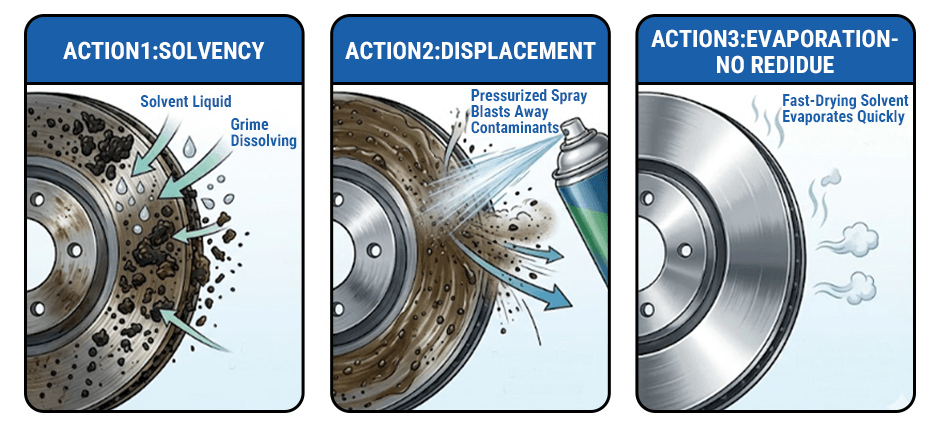
It’s not just a basic cleaner — it’s a strong chemical spray that breaks down dirt in three ways, leaving your brakes clean and working their best. Knowing this helps you use it properly. Think of it as a powerful chemical wash for your brakes.
Dissolve Tough Gunk
The formula melts down hard-to-clean stuff: thick grease, leaked fluid, mud, and baked-on brake dust that water can’t remove.
Blast Dirt Loose
It comes in a high-pressure can for a reason. The strong spray blows away the loosened dirt, reaching tight spots in brake parts on excavators, loaders, and other heavy machines.
Dry Fast with No Mess
A good brake cleaner evaporates quickly and leaves no residue. Once the grime is gone, the spray dries right away, leaving metal parts totally dry. That’s important — any leftover oily film would make your brakes less effective.
How to Use Brake Cleaner Safely and Effectively
Using brake cleaner is easy, but it’s a strong chemical — so you have to do it right to stay safe and protect your machine. Don’t rush this part.
Safety First
Before you even grab the can, get your area and protection ready.
- Work somewhere with fresh air: The fumes are strong and bad to breathe in. Use it outside or in a big, open shop. Never use it in a small closed room.
- Wear protection: It can irritate your skin and eyes. At least put on nitrile gloves and safety glasses. Latex gloves won’t hold up.
- Keep away from fire or sparks: Most brake cleaner catches fire really easily. Make sure no flames, welding, grinding, or static electricity nearby.
- Read the label: Not all cleaners are the same. Check if it’s chlorinated or not, and follow the warnings.
- Important warning: Never spray chlorinated brake cleaner on parts you’re going to weld. When heated, it makes toxic gas that can be deadly. Always know what kind you’re using.
Step-by-Step Use
Secure the Machine
Park the machine, apply the parking brake, and turn off the engine. For example, the wheels of wheeled machines should be securely fixed with wedges; crawler machines should ensure stability and prevent shaking.
Disassemble and Inspect Brake Components
Follow the repair manual given by the equipment manufacturer. Lift a corner of the machine and remove the wheel or track assembly. This allows you to access the brake calipers, brake discs and hubs for easy subsequent cleaning. The equipment is quite heavy, use suitable lifting equipment.
Do a Simple Check
Before spraying cleaner, check for any hydraulic fluid leaks, badly worn brake pads, or deep scratches on the brake discs. If the part is broken, cleaning alone cannot repair it, and you have to replace the part.
Protect Sensitive Components
While brake cleaner will volatilize itself, it can damage rubber, plastic parts, and painted surfaces. Take a piece of cardboard or a rag and cover the rubber sleeve on the caliper pin, the wire, and the plastic parts next to it to prevent the detergent from spraying.
Spray from Top to Bottom
Hold the cleaner can 18-24 inches (about 45-60 cm) from the brake surface and spray with short bursts of force. Start at the top of the brake caliper and slowly spray down onto the brake disc. The detergent that flows down like this can help flush out the dirt underneath.
Collect the Liquid that Flows Down
Place a large oil drain pan or absorbent pad directly under the brake assembly. Catch the dirty liquid that flows down after spraying.
Clean Up Stubborn Stains
If there is thick, caked-on grease or mud, just one spray may not be enough. After the first spray, use a stiff, but non-metal, brush over stubborn stains. Then spray the cleaner again to flush out the dirt.
Allow the Parts to Dry Completely
Just let the brake parts air dry naturally, because the cleaner evaporates quickly and usually dries in a few minutes. Never use a dirty rag to wipe it, as it will contaminate the clean surface again.
Reassemble and Test
Once all parts are completely dry, reinstall the wheels or tracks according to the torque specifications in the repair manual. Then test the brakes at low speed to confirm that they are working properly.
How Often Should You Clean Heavy Equipment Brakes?
How often you clean brakes depends on the work and conditions. A fixed schedule doesn’t always work — use these signs instead:
- Working Environment: Machines in wet, muddy quarries need much more frequent brake cleaning than those on dry, hard dirt. In tough conditions, rinse brakes quickly at the end of each day, and do a full clean every 100–150 hours.
- Operating Hours: Add brake cleaning to your regular service. For example, do it during your 250-hour or 500-hour maintenance checks.
- Daily Visual Check: Look over the brakes every day before starting the machine. If you see thick mud or dirt buildup, clean them right away — no matter how many hours it’s run.
- Brake Performance Signs: Your machine will let you know when brakes need help. If you hear squealing or grinding, or if the machine pulls to one side when braking, stop and clean the brakes immediately.
Can I Clean Brakes Without Taking Tires Off?
Nope. On heavy equipment, wheels, tires or track assemblies almost completely block your view and access to the key brake parts. Spraying from the outside only removes surface dirt you can see. You won’t be able to:
- Reach the back of the caliper or the inner brake pad
- Clean out the caliper slide pins or pistons
- Properly check parts for wear, damage or leaks
Actually, you’ll probably just push surface dirt deeper into the mechanism and cause more damage. A quick spray makes the outside look clean, but it does nothing for the parts that actually make the brakes work. Removing the wheel is the only way to do the job properly and keep your machine safe and reliable.
Wrapping Up
Follow these steps to keep your machine’s brakes in good shape, avoid expensive repairs, and stop dangerous breakdowns. If you find worn brake pads, a damaged rotor, or a leaking caliper during checks, you’ll need a trustworthy parts supplier. We supply high-quality brake system parts for most heavy equipment brands at fair prices. With FridayParts large stock, you can get the parts you need and get back to work safely and fast.
