

The blower motor is one of the components that affects operating comfort. It drives the heating, ventilation, and air conditioning (HVAC) components. Before rushing to order a replacement, some easy tests can confirm whether actually a problem with the motor. Read on to learn how to test your blower motor. Complete the testing process step by step to diagnose possible problems.
Tools and Materials Needed
Before you start, grab the right tools. These items are a must-have.
- Digital Multimeter: This is your top diagnostic tool. It lets you measure voltage and resistance.
- Screwdriver and Socket Set: Heavy equipment uses all kinds of fasteners to hold panels on.
- Jumper Wires: Use fused jumper wires for bench tests. They safely send direct power to the motor.
- Safety Gear: Always wear insulated gloves and goggles. You’re working with electrical parts, after all.
- Your Machine’s Service Manual: This is gold for finding the blower motor and getting the right electrical specs for the part.
Safety First! Disconnect the machine’s battery before you do any testing. This stops accidental short circuits and keeps you safe from electric shocks.
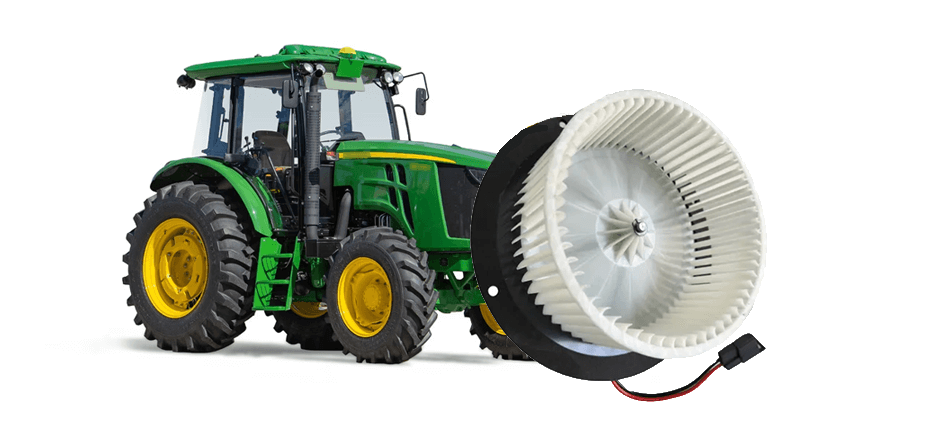
How to Test a Blower Motor: Step-by-Step Guide
Testing a blower motor is just a matter of checking things one by one. Follow these steps, and you’ll figure out if the motor itself is broken or if the problem is somewhere else in the electrical circuit.
Step 1: Locate the Blower Motor
Blower motors in heavy equipment (like excavators, loaders, or tractors) are the most common spots to look:
- Behind the operator’s seat, inside the main HVAC housing
- Under a side console panel
- In a special compartment you can reach from outside the cab
Check your machine’s service manual for the exact spot on your model. Once you find the motor, you might have to take off a few panels or the motor housing cover to get to it and its electrical connector.
Step 2: Visual Inspection
Before reaching for any tools, a thorough visual inspection can reveal some of the most common bad blower motor signs. Take a close look at the motor and its surrounding area for these clear indicators of trouble:
- Corrosion on the electrical terminals
- Melted plastic on the connector or motor housing
- Dirt, leaves, or plastic bags stuck in the fan’s squirrel cage (this can stop the fan from spinning)
- A burnt smell is coming from the motor
If you find a lot of debris, clear it out and test the fan again. Sometimes a simple blockage is the only issue.
Step 3: The Direct Power Test (Bench Test)
Now we determine if the motor is working properly.
- First, unplug the one connected to the motor. Find two jumper wires and prepare a battery. By the way, please check carefully whether your car has 12 volts or 24 volts of electricity. Don’t make any mistakes; otherwise, the motor may be useless.
- Positive to positive, negative to negative, connect the jumper wires to the two feet of the motor.
If the motor hum turns up at once, congratulations, the motor is good. The problem is in other places, such as wiring, resistors, or switches. But if it doesn’t respond, sparks, or spins weakly, it’s basically hopeless. Get ready to get a new one.
Step 4: The Multimeter Resistance Test
If you don’t want to use a separate power source, a multimeter can check the motor’s internal windings.
- Make sure the motor is unplugged.
- Set your digital multimeter to the Ohms (Ω) setting — use the lowest range (like 200 Ω).
- Touch the multimeter probes to the two electrical terminals on the motor.
You’re looking for a low, steady resistance reading. The exact number doesn’t matter as much as what you don’t see.
- A good motor will show a low reading (usually under 5 Ohms).
- A broken motor will show “OL,” “1,” or infinite resistance — that means the internal windings are snapped.
- A shorted motor will show a reading of zero or almost zero — that means the windings have melted together.
Step 5: Check for Power at the Connector
If the motor passed the direct power or resistance test, next check if power is actually reaching it. This tests the rest of the HVAC electrical system.
- Reconnect the machine’s battery.
- Leave the blower motor unplugged.
- Turn the machine’s ignition to “ON” (you don’t need to start the engine).
- Turn the cab’s fan speed switch all the way up to the highest setting.
- Set your multimeter to measure DC Voltage (V⎓).
- Carefully stick the multimeter probes into the terminals of the wiring harness connector (the one that plugs into the motor).
The voltage reading should match your machine’s system voltage — either 12V or 24V.
- If you get the right voltage, but the motor still won’t run when plugged in, the motor is definitely faulty.
- If the reading is zero or really low, the problem isn’t the motor. It’s somewhere else in the circuit.
What Your Blower Motor Test Results Mean?
After you do the tests, what you find will tell you exactly what’s wrong. Here’s how to figure out the results.
Motor Fails the Direct Power Test or Resistance Test
The blower motor is broken inside. The tiny wires (called windings) are either snapped or melted together. This is easy to fix—you just need a new motor.
Motor Works with Direct Power, But No Voltage at the Connector
Good news: the motor is fine! The problem is that electricity isn’t getting to it. The issue is somewhere between the battery and the motor. Check these parts in this order, starting with the easiest!
- HVAC Fuse: This is the most common thing that breaks. Look in your machine’s fuse box for a fuse that says “HVAC,” “Blower,” or “Fan.” If the metal inside is broken, it’s a blown fuse—just replace it.
- Blower Motor Resistor: This part makes the fan go fast or slow. If the fan only works on the highest speed (or not at all), this is probably broken. It’s super common to fix, and it doesn’t cost much.
- Fan Control Switch: The switch on your dashboard (the one you turn to change fan speed) might be broken. It’s not sending the “go” signal to the motor.
- Wiring or Relays: Bumpy rides can damage wires. Or a small part called a relay might stop working. Either way, electricity can’t get through.
Motor Runs, But Airflow is Weak or Noisy
This might not be an electricity problem. Try these checks:
- Cabin Air Filter: Worksites are dusty, and this filter can get totally clogged. A blocked filter stops air from moving. Just take it out and replace it if it’s dirty.
- Squirrel Cage: That’s the fan part shaped like a wheel. Look again for small stuff (like dirt or bits of plastic) you missed. If something’s stuck there, it can make the fan wobbly and loud.
Blower Motor Replacement
If your tests show the motor is totally broken, you have to replace it—that’s the only fix. If you keep using a broken HVAC system, the person operating the machine might get tired easily. And the cab could become an unsafe place to be. When you think about the cost of a new blower motor, choosing a good-quality aftermarket part is a smart move. This simply means buying a part made by a trusted manufacturer, not the machine’s original brand.
At FridayParts, we have tons of strong, reliable blower motors. They fit lots of different heavy equipment brands. Our parts work just as well as the ones that came with the machine—but they don’t cost as much. That way, you can get your machine’s heat or AC working great without spending too much money. Find the right parts for your machine at FridayParts today!
