

Stripped lug nuts are one of the most annoying headaches in repairs. Most of the time, it’s from over-torquing them before. Either way, you still have to take these nuts off when changing tires or doing maintenance. Once they’re stripped, removing them gets really tough. They either just spin empty or won’t move, no matter how hard you twist. But you can fix this safely as long as you use the right tools and way. Next, we’ll show you step by step how to remove lug nuts from your equipment. Let’s get started!
Tools Needed to Remove A Stripped Lug Nut
Before you start, round up these things to make sure you’re ready:
- Safety Gear: Grab a pair of heavy-duty work gloves and ANSI-rated safety glasses.
- Jacks and Jack Stands: Use a hydraulic jack and stands with enough weight capacity. Never crawl under the machine if it’s only supported by a jack.
- Heavy-Duty Breaker Bar: Grab a long-handled breaker bar (3/4-inch or 1-inch drive). If you can, have a cheater pipe handy too—it’ll save you a ton of effort.
- High-Torque Impact Wrench: Get a powerful pneumatic or cordless impact wrench (1-inch drive is ideal). A lot of times, what you can’t budge by hand, this tool will loosen with a jolt.
- Industrial-Grade Penetrating Oil: Use industrial-grade penetrating oil. Give it a spray first, and rust will be way easier to deal with.
- Heavy-Duty Lug Nut Extractor Set: These sockets have reverse spiral flutes inside that grip stripped nuts tightly. Make sure you pick a size that fits your equipment.
- Sledgehammer and Cold Chisel: If you act more strongly, you need a sledgehammer and a cold chisel.
- Oxy-Acetylene Torch (Optional, with extreme caution): For the most stubborn nuts. But it’s super risky, and only if you’re an experienced operator.
- Heavy-Duty Drill and Bits: When nothing else works, you can try a high-power drill with cobalt or titanium drill bits.
- Wire Brush: To clean the area around the lug nut before you start.
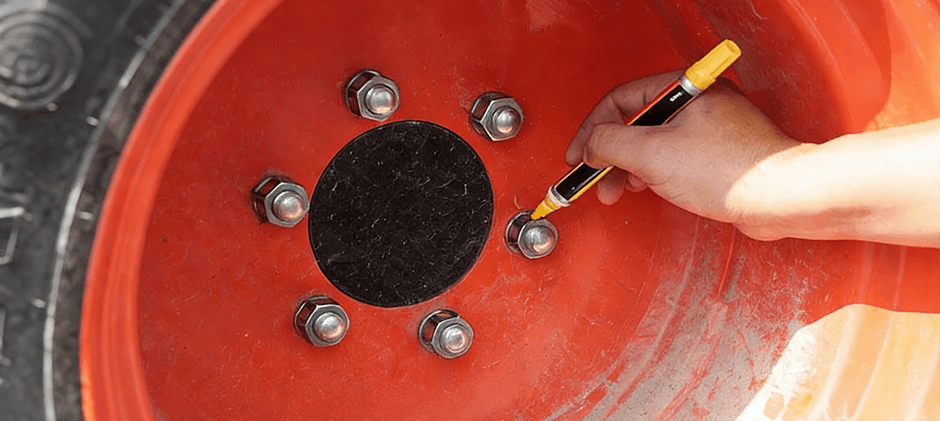
Step-by-Step Guide to Removing a Stripped Lug Nut
All tools ready? Let’s get that stripped lug nut off. We’ll start with the gentlest ways first, then step up if we have to.
Step 1: Safety First & Prep Work
Don’t touch that nut yet—make sure the machine’s stable. Park it on hard, flat ground. Chock the wheels that stay on the floor so it doesn’t roll. Lift the machine at the spot the manufacturer says to use, then prop it up right away with properly rated jack stands. Scrub the whole wheel hub area, especially around the stripped nut, with a wire brush to get rid of dirt, mud, and rust.
Step 2: Spray on Penetrating Oil
Douse the stripped lug nut well with high-quality penetrating oil. Focus on where the nut meets the wheel and the stud—don’t be stingy. The oil needs to seep into the threads and break up that rust and gunk. Let it soak for at least 30 minutes. If the nut’s really stuck, leave it for a few hours or even overnight—it’ll make a huge difference.
Step 3: Breaker Bar + Smaller Socket
Sometimes a regular socket can’t grip a rounded nut anymore. Grab a 12-point socket that’s just a bit smaller (like an imperial socket on a slightly rounded metric nut). Hammer it firmly onto the stripped nut—you want a tight, friction fit. Once it’s on good, slap your long breaker bar on it and twist counter-clockwise with steady, even pressure. Slide a cheater pipe over the bar if you need more oomph. Leverage is your best buddy for stuck hardware. A longer bar amps up your force—perfect for breaking loose nuts that feel like they’re welded on.
Step 4: Grab a Heavy-Duty Lug Nut Extractor
If the breaker bar doesn’t work, bring in the specialist tool. Lug nut extractors are made for this exact problem. Grab the right size from your set. Hammer it onto the stripped nut. Twist counter-clockwise with a breaker bar or impact wrench. The spiral teeth inside will dig in deeper as you turn, locking on tighter. This trick almost always works like a charm.
Step 5: Destructive Methods (Only If All Else Fails)
If the nut still won’t budge, face it—you’re gonna destroy the nut, and maybe the wheel stud too, to get it off.
- Hammer & Chisel: Place the chisel on the side of the nut, with the angle of alignment in the direction of release. Tap the groove first, then tap firmly. Be careful not to hurt the wheel hub with your slider.
- Heat It Up (WARNING!): This works great, but it’s super risky. Use an oxy-acetylene torch to heat the nut until it’s glowing red. The nut will expand faster than the stud, breaking the rust bond. Point the flame only at the nut—don’t hit the wheel! Too much heat can ruin the wheel’s finish and even its structure. As soon as it’s hot, grab your extractor or impact wrench and yank it off. Keep a fire extinguisher nearby.
- Drill It Out: This is the last, most tedious option. Use a center punch to make a small dent right in the middle of the nut. Start with a tiny pilot drill bit and drill straight through the center of the nut and stud. Gradually use bigger bits, and put on cutting oil to keep the bit cool and sharp. The goal is to weaken the nut so it either falls apart or you can drill the head off—then you can pull the wheel over the leftover stud.
Preventative Maintenance Tips
Fixing a stripped lug nut once is enough. To keep this from happening again, just add these simple steps to your regular maintenance routine.
- Grab a torque wrench: Over-tightening with an impact wrench is the number one reason lug nuts get stripped and stuck. Always use a calibrated torque wrench to tighten nuts to the manufacturer’s specs, and follow that star-shaped tightening pattern as it matters.
- Slap on some anti-seize compound: Before putting the lug nuts on, dab a tiny bit of good-quality anti-seize lube on the wheel stud threads. It forms a barrier that keeps rust and corrosion from gumming up the works between the nut and the stud.
- Clean and check ’em regularly: When you wash your machine, take a sec to spray down the wheel hubs and lug nuts. Give ’em a once-over every now and then for rust, damage, or wear. A machine with a comfy cab is way more productive—just like you wouldn’t overlook wonky blower motor resistor symptoms, don’t ignore rusty spots on your wheels.
- Use good-quality sockets: Always go for a solid six-point socket that fits the lug nut. Worn-out or ill-fitting sockets slip super easily and round off the nut’s edges in no time.
Shop Lug Nut Replacements at FridayParts
Removing the lug nut from the wheel can be challenging, but with the right tools and methods, it can be done easily. Of course, after removing the spool nut, if you don’t already have a spare nut, you’ll likely need to replace it. So, check out our store today —we offer a wide selection of replacement nuts, studded nuts, and more accessories to make your equipment look like new again. Shop now!
