

Seeing SPN 157 FMI 18 on your machine’s display means one simple thing — your engine isn’t getting enough fuel. This code, part of the broader Top J1939 Fault Codes List: Common SPN Diagnosis & Repair, tells you that the fuel rail pressure is too low, which can cause your machine to lose power or even stop running completely.
This guide will show you, step by step, how to find and fix the cause — starting with the easiest things first — so you can save time and money and get your machine back to work.
What Is SPN 157 FMI 18?
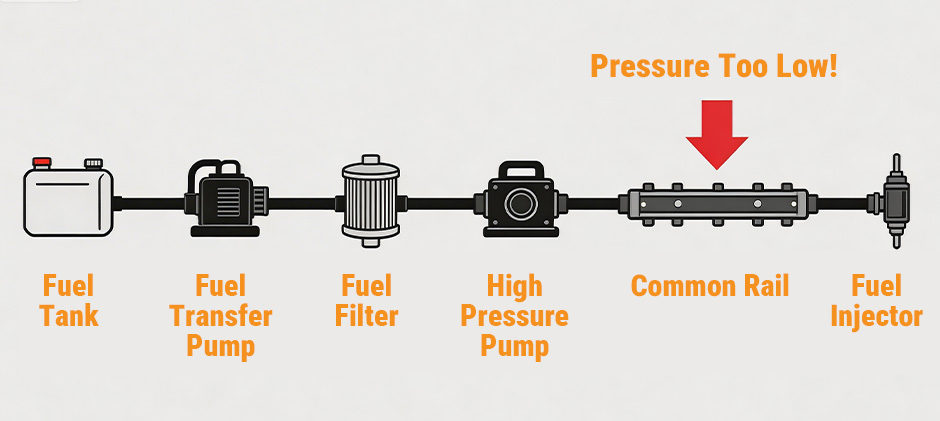
This fault code means: Fuel Rail Pressure Data is Valid but Below Normal Operating Range (Moderately Severe Level).
Unlike some other fault codes (like FMI 3 or FMI 4), FMI 18 doesn’t mean there’s a wiring or sensor problem.
It means your fuel pressure in the common rail is really too low, even though the sensor is working fine.
When this happens, the Engine Control Module (ECM) will lower power to protect your engine from damage.
| Parameter | Description |
|---|---|
| SPN Code | 157 |
| FMI Code | 18 |
| Fault Meaning | Fuel rail pressure is too low |
| Typical Cause | Fuel delivery issue (filter, pump, or leak) |
| Component Affected | Fuel system — both low and high-pressure sides |
| Impact | Engine derate, hard start, or shutdown |
What Are the Common Symptoms?
When this code appears, you’ll likely notice one or more of these problems:
- Severe Engine Derate: The engine loses a lot of power.
- Warning Lights: “Check Engine” or “Stop Engine” light shows on the dashboard.
- Hard Starting or No Start: Engine cranks but won’t start easily — or at all.
- Rough Idle or Stalling: Engine runs unevenly or shuts down under load.
- Visible Smoke: White or black smoke may appear from the exhaust.
Why Does SPN 157 FMI 18 Happen? 5 Common Causes
This code almost always means your engine isn’t getting enough fuel.
Before replacing expensive parts, check these common causes first — most problems are simple.
1. Clogged Fuel Filters
The number one cause. Dirty or blocked filters stop fuel flow and starve the high-pressure pump.
2. Failing Lift Pump
The lift (feed) pump moves fuel from the tank to the high-pressure pump.
If it’s weak or broken, your fuel system won’t get enough pressure.
3. Air in the Fuel System
Air bubbles reduce fuel pressure. Loose fittings, cracked hoses, or bad seals on the water separator often let air in.
4. Fuel Leaks
Leaks can be outside (visible drips) or inside (a bad injector or pressure relief valve). Internal leaks cause fuel pressure loss even if you don’t see fuel dripping. A leaking injector is a common internal cause, and it’s helpful to know the 7 Common Symptoms of a Bad Fuel Injector.
5. High-Pressure Fuel Pump Failure
Rare but possible. If all other causes are ruled out, the high-pressure pump may be too worn to build enough pressure.
FMI 18 is your machine saying, “I’m not getting enough fuel.” Start simple — check the filters first.
How to Fix SPN 157 FMI 18: A 5-Step Diagnostic Plan
Follow these steps in order — start with the easiest fixes and move toward more complex ones.
Step 1: Replace the Fuel Filters
Always start here. Even if the filters look clean, they can still be blocked inside. For a detailed walkthrough, you can follow this guide on How to Change a Fuel Filter?.
Change both the primary and secondary fuel filters with new ones.
After replacement, prime the fuel system to remove any air.
In many cases, this step alone clears the fault code.
Step 2: Inspect for Leaks and Air Ingress
Check all fuel lines from the tank to the engine.
Look for:
- Wet spots or drips
- Cracked or soft hoses
- Loose fittings
- A loose or damaged fuel-water separator bowl
Tighten anything loose and fix any leaks you find.
Step 3: Test the Low-Pressure Lift Pump
Turn the key to the “ON” position (without starting the engine).
- If you hear the pump run for 30–60 seconds, it’s working.
- If it’s silent, check the pump fuse and electrical plug.
- And if you have a fuel pressure gauge, test the low-pressure side — it should usually read 5–15 PSI (check your manual for your model).
Step 4: Check the High-Pressure Side
If filters and the lift pump are working fine, focus on the high-pressure system.
- Look at the fuel pressure relief valve — if it’s stuck open, it will bleed off pressure.
- Test the injectors — one leaking injector can return too much fuel to the tank.
A “leak-off” test helps identify the bad one.
Step 5: Evaluate the High-Pressure Fuel Pump
If none of the above steps solves the problem, the high-pressure pump might be worn or damaged.
Testing this pump usually requires special tools, so it’s best done by a technician.
It’s also the most expensive part, so replace it only after other issues are ruled out.
When Should You Replace the Fuel Rail Pressure Sensor?
Rarely for an FMI 18 code.
This code means the sensor is reading correctly — it’s just telling you that pressure is low.
Replacing the sensor won’t fix the problem.
Only replace it if you’ve confirmed with a manual gauge that pressure is normal, but the sensor still reports it as low. These are the Common Faulty Fuel Rail Pressure Sensor Symptoms, which are very different from what FMI 18 indicates.
Conclusion
SPN 157 FMI 18 is a warning that your fuel system isn’t delivering enough pressure. The good news is that it’s often caused by simple things like clogged filters or air leaks.
Keep your fuel system clean, replace filters on schedule, and always watch for leaks — this will help prevent this code from showing up again. FridayParts offers a wide selection of high-quality filters compatible with most machines. Shop now!
