

Pulled your mower out of the garage and it just won’t start? Smells like gas? You’re probably dealing with a flooded carburetor. In this guide, we will talk about how carburetor flooding happens, signs, causes and easy fixes for your small engine equipment.
Table of Contents
- Understanding Carburetor Flooding
- Causes of Carburetor Flooding
- Signs Your Carburetor Is Flooding
- Simple Steps to Diagnose & Fix Carburetor Flooding
- What If I Ignore Carburetor Flooding
- Conclusion

Understanding Carburetor Flooding
What Is Carburetor Flooding
You can picture the carburetor as the heart of your equipment. Its main function is to mix fuel and air in the right proportion. Now, when this heart starts pumping too much fuel, we have a flooded carburetor. That’s what we called carburetor flooding. Sounds like a mess, right? But how does it happen?
What’s Actually Happening
Your carburetor is supposed to mix just the right amount of fuel with air. But when the float or needle valve inside goes bad, fuel just keeps flowing in more than the engine can burn. That’s carburetor flooding. The flooding may happen in this way:
- Float chamber overfill caused by a stuck or misaligned float
- Float valve/need valve failure prevents proper shutoff of fuel flow
- Excessive fuel pressure overloads the carburetor bowl
- Obstructed fuel return or venting traps fuel in the carb
Even a minor deviation in float operation can cause the carburetor fuel to overflow, bringing about many visible symptoms during operation and after engine shutdown.
What Causes Carburetor Flooding
The reasons for carburetor flooding are manifold. The commonest are as follows:
- A faulty float: If the float are stuck by varnish, debris or deformation, it cannot close the needle valve. This can lead to consistent fuel flow into the bowl, engine misfire or running rich and visible fuel spillage.
- Needle valve wear: After long time use, the needle valve tip may wear, causing the carburetor to run excessively rich at idle or in cold temperatures, fuel bubbling out of vents and engine flooding during prolonged idle.
- Vent blockage or high pressure: The blocked vents may force fuel past the needle valve, producing overflow under normal engine, erratic fuel lever in the float bowl and difficulty maintaining a stable idle. For some riding mowers, high fuel pressure can also force fuel.
Signs Your Carburetor Is Flooding
How do you know if your carburetor is flooding? Here are common signs of carburetor flooding.
- Visible fuel leaks: Dripping fuel around the float bowl, gas flowing out of the vents or overflow passages, and wet spark plugs all point toward a flooding problem. In this case, your float or needle valve is likely to blame.
- Strong fuel smell: A sharp gasoline odor around the carburetor or air filter is one of the earliest warning signs. If your mower smells strongly of gas before you’ve even started it, excess fuel is already sitting where it shouldn’t be.
- Hard starting or engine stalling: Excess fuel in the intake can cause carburetor flooding, engine cranking without ignition or misfire immediately after starting.
- Black exhaust smoke: If your engine does manage to start, thick black smoke coming out of the exhaust means it’s burning way too much fuel. That’s a running sign of carburetor flooding you don’t want to ignore.
- Fuel leaking after shutdown: If you notice gas dripping from the carb hours after you’ve turned the mower off, or you smell strong fuel vapour with the engine cold, that’s a clear sign of float valve failure or misadjustment.
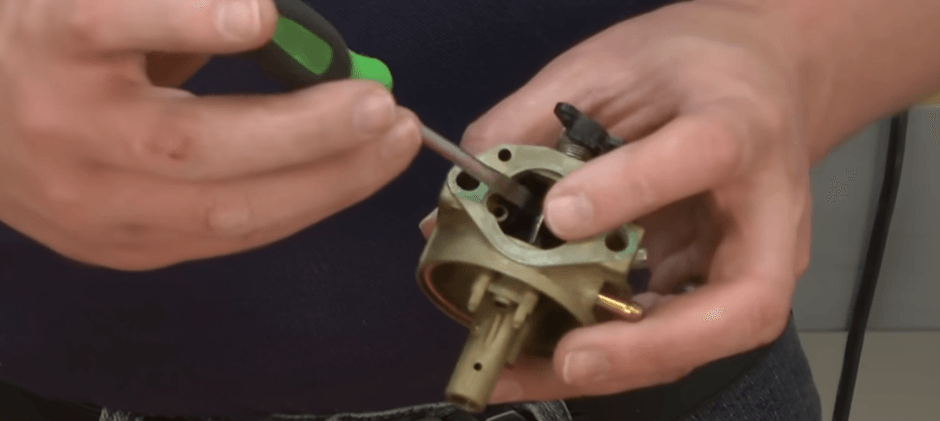
How to Diagnose & Fix Carburetor Flooding Yourself
The diagnosis involves five steps:
- Check the float for leaks, deformation or sticky operation
- Test the needle valve to ensure a proper shutoff when the float reaches the right height
- Check fuel pressure and supply to verify the excess pressure does not force fuel past the valve
- Inspect venting and passages to make sure the air can displace fuel normally in the float chamber
- Watch for symptoms like carburetor hard start flooding or fuel overflow after shutdown
Easy Fix Step By Step
Once you have diagnosed the issues, you can take the following steps for repair.
- Turn off the ignition to ensure safety
- Clean or replace the float and needle valve to restore correct shutoff
- Adjust float height according the manufacturer’s specifications specified in your owner’s manual
- Clean the carburetor with a carburetor cleaner
- Inspect the needle & seat and replace them if the Viton tip is damaged
- Check and clean the fuel inlet and vent passages
- Inspect gaskets and the mounting surface to prevent additional leaks
- Pay attention to the common causes to prevent the carburetor fuel overflow from happening again
Regular Maintenance Tips
An ounce of prevention is worth a pound of cure. You can do the following maintenance to protect your carburetor and engine.
- Always wear gloves and glasses and work in a ventilated area for safety
- Clean the carburetor annually
- Change air and fuel filters every 5 to 12 months (Shop high-grade air filters and fuel filters here.)
- Inspect your carburetor regularly for wear and tear
See full Lawn Mower Carburetor Care Maintenance Guide
What If I Ignore Carburetor Flooding
If you ignore the flooding issue, you may suffer from the following problems.
- Reduced engine life
- Decrease in fuel efficiency
- Hard starting and a ruined starter
- Potential fire hazard
- Get a flooded engine
Conclusion
Addressing carburetor flooding symptoms requires careful observation of the float and needle, fuel supply and venting. Regular inspection and maintenance help prevent carburetor flooding from happening. If you have unfortunately got a flooded engine, you can simply follow the steps we list and perform the repair process according to the website. Do remember to follow your owner’s manual when you do any maintenance or repairs. At FridayParts, you can get a handful of useful knowledge on engine fuel systems on our blogs and a vast range of high-quality carburetor replacements for your machines.
