

As the weather gets hotter, the cab A/C sometimes stops working. In many cases, it’s because the A/C clutch is not engaging. When that happens, the refrigerant stops flowing in the system, so the cooling won’t work. Here are some common reasons why the A/C clutch won’t engage, and how to fix it.
What Does the A/C Clutch Do?
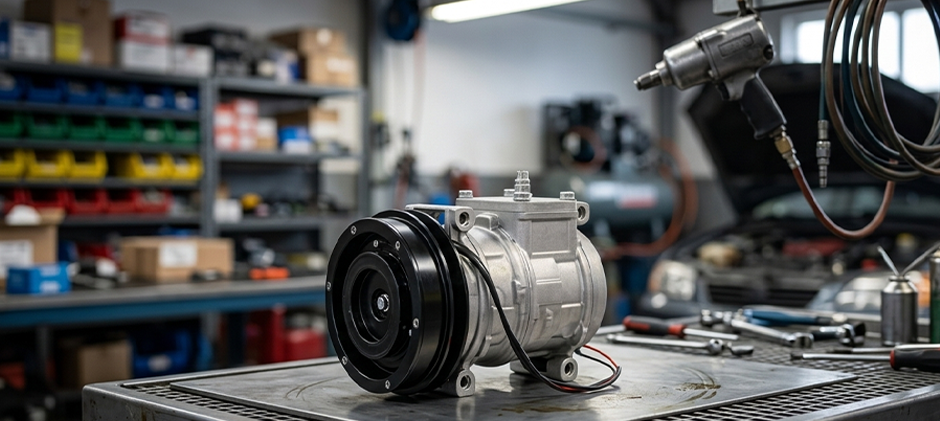
You can think of the air conditioning clutch as a “switch” for the air conditioning compressor. The belt in the engine keeps turning the pulley in front of the compressor, and even if you don’t have the air conditioning on, it’s idling. But at this time, the compressor itself is actually not working.
When you turn on the air conditioning in the cab, the clutch receives an electrical signal that then becomes an “electromagnet”. This magnetic force will “pull” the pulley in and connect it to the compressor’s internal shaft. Once connected, the engine’s power can go to the compressor, the refrigerant begins to circulate, and the cold air comes out.
If the air conditioning clutch is not engaged, the pulley still idles on its own. Of course, the compressor does not work, so there is no air conditioning.
Why Won’t My A/C Clutch Engage?
An A/C clutch that won’t engage is usually a sign of another problem in the system. The A/C is designed with safety features that stop the clutch from turning on to protect expensive parts. Most of the time, the issue comes down to three things: refrigerant problems, electrical issues, or mechanical failure.
Incorrect Refrigerant Level
This is the most common reason the A/C clutch won’t engage. The A/C system is sealed, and it needs the right pressure to work right. It has pressure switches to protect the compressor.
- Low refrigerant: If there’s a leak, refrigerant pressure will drop. The low-pressure switch will keep the clutch from turning on, to protect the compressor. It needs both refrigerant and oil to run without getting damaged.
- High refrigerant: If the system is overfilled or something is blocked, pressure can get way too high. The high-pressure switch will cut power to the clutch, so hoses, seals, and the compressor don’t get ruined.
Electrical Faults
Electricity travels from the AC switch in your cab to the AC clutch through several parts. If any one of them fails, the signal won’t go through. Since heavy equipment runs in rough, vibrating, and dirty conditions, electrical problems are really common.
- Blown fuse or bad relay: This is the simplest and often most missed problem. A fuse can blow from a quick voltage spike or a short circuit in the system. The AC clutch relay — which is like an electric switch — can also wear out over time.
- Bad pressure switches: The safety switches themselves can break. They might get stuck open, so electricity can’t flow through even if refrigerant pressure is normal.
- Damaged wiring: Wires can corrode, rub through, or break. A weak ground connection is also a common issue. On heavy equipment, constant vibration and exposure to dirt and weather can easily damage wires or connectors.
- Failed clutch coil: The magnetic coil inside the clutch can burn out or short out. When this happens, it can’t make the magnetic force needed to engage the clutch, even if it’s getting full power.
Mechanical Failure
Sometimes the problem is with the clutch or compressor parts themselves.
- Too much air gap: The small space between the clutch plate and the pulley is called the air gap. After thousands of times engaging and disengaging, these parts wear down and the gap gets bigger. If the gap is too wide, the magnet from the coil won’t be strong enough to pull the plate in.
- Seized compressor: If the compressor inside is broken and locked up, the clutch can’t turn it. Sometimes the clutch will try to engage then slip right off. Or it can make the engine struggle and even burn up the serpentine belt.
How Can I Diagnose the Problem?
Now that we know the possible causes, we can go through a simple step-by-step process to find the real problem. You’ll need a few basic tools: an A/C manifold gauge set and a multimeter.
Step 1: Visual Check
Start by looking at the A/C compressor area. Check for obvious problems like:
- Loose, unplugged, or broken wires.
- Heavy rust or corrosion on the clutch connector.
- Oily dirt around the compressor, hoses, or fittings (this usually means a refrigerant leak, because the oil moves with the refrigerant).
Step 2: Check Fuses and Relays
This is the fastest and easiest step. Find the fuse box using your machine’s manual. Check the A/C fuse and relay.
- Pull the fuse and see if it’s blown.
- You can also swap the relay with another identical one (like the horn relay) to test it.
Step 3: Check Refrigerant Pressure with Gauges
If fuses and relays are fine, check system pressure next.
- Connect the manifold gauges to the high and low service ports (engine off). Read the static pressure.
- A healthy system usually shows a pressure close to the outside temperature (in °F). For example, around 80°F outside = about 80 PSI.
- If pressure is very low (under ~20–30 PSI), there’s likely a leak. The low-pressure switch is shutting the system off to protect the compressor. Don’t add refrigerant until the leak is fixed.
Step 4: Check Voltage at the Clutch
This helps you tell if it’s an electrical issue or a clutch issue.
- Unplug the A/C clutch connector.
- Start the engine and turn the A/C on.
- Set your multimeter to DC volts.
- Black probe to a good ground, red probe to the power wire.
You should see about 12–14 volts.
- If you have 12V: power is getting there → the clutch itself is likely bad.
- If you have 0V: the problem is upstream (fuse, relay, switch, or wiring).
Step 5: Check Clutch Coil and Air Gap
If you do have 12V, check the clutch itself. Coil resistance test:
- Engine off.
- Set multimeter to ohms (Ω).
- Measure the clutch coil: A good coil is usually around 2–5 ohms. OL or 0 = bad coil, needs replacement.
Air gap check:
Use a feeler gauge to measure the gap between the clutch plate and pulley. Most specs are around 0.030 inch or less. If the gap is too big, the clutch may not engage and may need adjustment or replacement.
How to Fix a Faulty A/C Compressor Clutch?
Once you figure out the problem, fixing it is straightforward.
- Low refrigerant: First find and fix the leak. Then pull a vacuum on the system and recharge it to the right level.
- Blown fuse or bad relay: Just replace the part. If the new fuse blows right away, you have a short somewhere you need to find.
- No voltage reaching the clutch: Test the wiring backward from the clutch, check pressure switches and connections, until you find where the power is cut off.
- Bad clutch coil or too much air gap: You’ll need to replace the whole AC clutch. On most heavy equipment, you can usually replace the clutch without removing the compressor or emptying the AC system.
Final Thoughts
A broken A/C isn’t just annoying—it makes the operator’s job a lot harder. If you check things step by step, it’s not that hard to find out why the A/C clutch isn’t engaging. Whether it’s a pressure switch, a relay, or the A/C clutch itself, you can fix the real problem without guessing. At FridayParts, we offer reliable air-conditioning parts to help you get your cab cool again fast.
