

When a wheel bearing starts to fail on off-road machinery, it rarely gives a clean warning. The first hints are usually noise, heat, or a “feels different” change that’s easy to blame on tires, brakes, or rough ground. This guide helps pinpoint symptoms of a bad wheel bearing, tell bearing noise from other drivetrain sounds, and run quick checks so a small bad wheel bearing doesn’t turn into hub, spindle, or axle damage.
What Is a Wheel Bearing?
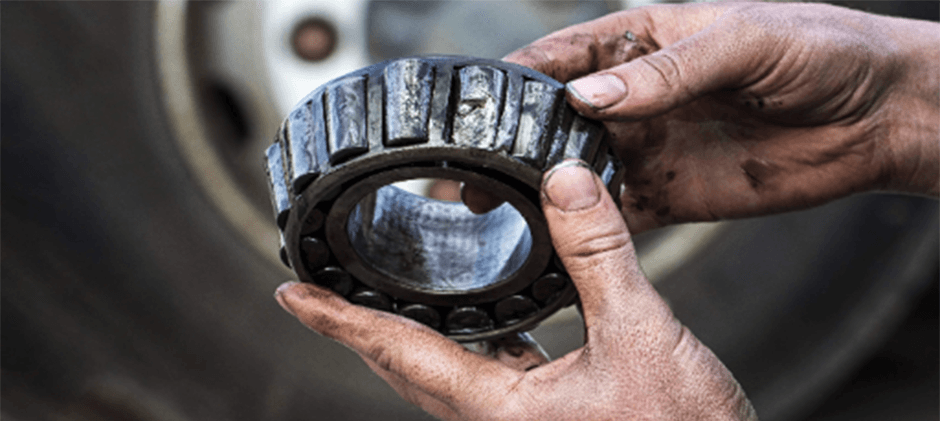
A wheel bearing is the part in the wheel end that lets the hub (and wheel) rotate with low friction while carrying a load. On heavy equipment, that load is not just machine weight—it’s also bucket loads, side loads while turning, and shock loads from ruts, rocks, and curbs.
Most wheel bearing setups include:
- rolling elements (balls or tapered rollers)
- inner/outer races
- a cage (keeps rolling elements spaced)
- seals (keep contamination out, keep grease in)
- grease (often the only lubrication the bearing gets)
Wheel bearings do two jobs at the same time:
- Hold the wheel steady (control play and keep alignment true at the hub)
- Let it spin smoothly under load and heat
If the seal fails or the bearing preload changes, wear accelerates fast.
What Causes Bad Wheel Bearings?
A bad wheel bearing is usually the result of heat + load + contamination. Here are the most common causes of off-road machinery.
1. Water and dirt intrusion
Mud, washdowns, pressure washers aimed at seals, and water crossings can push contamination past seals. Once grit mixes with grease, the bearing becomes a grinding compound.
2. Overloading and shock loads
Repeated heavy lifts, high side-load turns with a loaded bucket, and impacts (potholes, rocks, curbs) can damage races and rollers. Even if nothing breaks immediately, tiny dents become noise later.
3. Incorrect installation or setup
Many bearing failures are “built in” during service:
- wrong bearing type
- damaged race during press-in
- contamination during assembly
- incorrect torque/preload (too tight overheats; too loose hammers)
4. Misalignment or worn supporting parts
If a spindle, hub bore, or housing is worn, a new bearing can fail early. The bearing isn’t designed to “fix” a wobbling hub.
5. Heat from brakes or dragging components
Dragging brakes raises hub temperatures. Hot grease thins, oxidation rises, and the bearing loses protection.
6. Tire and wheel issues that add stress
Out-of-balance tires, incorrect tire pressure, or bent rims can add vibration and cyclic loads. Off-road machines also see more low-speed, high-torque steering loads that stress bearings.
Causes explain why it happens. Symptoms tell you where to look before it gets unsafe.
8 Symptoms of a Bad Wheel Bearing
Below are the most useful symptoms of a bad wheel bearing for off-road machinery owners. One symptom alone isn’t proof—but patterns are strong clues.
1. Growling, humming, or rumbling that changes with travel speed
A classic sign: a low growl/hum that rises with ground speed (not engine RPM). It may be faint at first and louder after the machine warms up.
Clue: If the sound gets louder as speed increases—even at steady engine RPM—suspect wheel-end bearings.
2. Grinding or scraping
Grinding usually means the rolling surfaces are damaged, or the bearing is running with too little grease. On heavy equipment, this can quickly damage the hub and spindle surfaces.
Action: If grinding is heard, treat it as a near-failure condition. Keep travel slow and short, and plan an inspection immediately.
3. Wheel-end heat that’s higher than the other side
A failing bearing often runs hotter due to friction or preload issues. After a short travel:
- One hub is noticeably hotter than the others
- Heat increases after turns or braking
Safe check: Use an infrared thermometer if available. Compare left vs. right on the same axle.
4. Looseness, play, or “wobble” at the wheel
Excessive wheel play is one of the most direct mechanical signs of a bad wheel bearing.
What it can look like:
- visible wobble at the tire/wheel
- clunk when changing direction (forward ↔ reverse)
- looseness felt during steering corrections
5. Steering that feels vague, jerky, or unpredictable
A worn bearing can let the hub shift under load. On machines that already have some steering “feel” from terrain, the key is to change over time:
- needs more correction than usual
- feels less stable when carrying loads
- wanders more on hard surfaces
6. Uneven tire wear that keeps coming back
Tires can wear unevenly for many reasons (alignment, inflation, suspension wear). But wheel bearing play can cause:
- Scalloping/cupping patterns
- Accelerated edge wear
- Repeated “mystery wear” even after alignment checks
7. Vibration that increases with speed or during turns
A bearing with pitted races can transmit vibration into the chassis. Often it is:
- Worse at higher travel speeds
- Worse when turning one direction (load shifts)
Note: Vibration alone is not enough to call it a bearing—tires and driveline joints can do the same. Pair this symptom with noise or heat for better accuracy.
8. Grease leakage, dirty buildup, or damaged seals at the hub
A seal that’s leaking grease is also a seal that may be letting contamination in. Look for:
- wet grease lines on the inside of the wheel
- Heavy dirt stuck to oily residue
- torn, loose, or missing seal components
If the seal is damaged, bearing life drops fast—especially in muddy or dusty jobsites.
How to Identify a Bad Wheel Bearing Noise?
Noise diagnosis on off-road machinery is tricky because cabs, tracks/tires, hydraulics, and attachments all add sound. Use a structured approach.
Step 1: Separate travel-speed noise from engine-speed noise
- If noise follows ground speed, suspect wheel ends, final drive, or drivetrain.
- If noise follows engine RPM, suspect engine/accessory-related issues.
Step 2: Try the “load shift” test
On a flat, open area at low speed:
- make gentle left and right turns,
- listen for noise changing when weight shifts
Often, bearing noise gets louder when the failing side is more heavily loaded.
Step 3: Compare forward vs. reverse
A worn bearing may sound different under direction changes because loads reverse through the hub and axle.
Step 4: Eliminate brake drag
After a short travel without heavy braking:
- Check for heat at the hub and also at brake components if accessible
- dragging brakes can mimic bearing heat and noise
Step 5: Confirm with a lift/stand inspection if possible
If safe lifting is available, rotating the wheel by hand can reveal roughness, binding, or grinding.
Wheel Bearings Check Tips
These checks help confirm symptoms of a bad wheel bearing and reduce wrong part swaps.
1. Visual inspection at the hub and seal area
Look for:
- grease sling
- cracked seal lips
- missing fasteners or damaged dust caps
- metal dust around the hub (late-stage wear)
2. Temperature comparison
After a short, normal move:
- Measure hub temps left vs. right
- A clear outlier is a strong clue
3. Wheel play check
If the wheel can be safely lifted:
- Grab at the top and bottom and rock
- Then grab left and right and rock
Excess movement suggests bearing looseness or worn hub/spindle surfaces. Also listen for clunks.
4. Spin check
Rotate the wheel:
- roughness, “sand” feel, or binding points are bad signs
- A smooth wheel end should feel consistent through a full rotation
5. Grease condition check
If the design allows inspection:
- metal flakes or gritty feel = internal damage
- burnt smell or dark, cooked grease = overheating
Once checkpoints point to bearing failure, the smart move is replacing the bearing and correcting the root cause (seal, preload, worn hub, or misalignment). Waiting often damages the surfaces that a new bearing needs. If symptoms point beyond the wheel end (slipping, rough shifts, power loss to the wheels, or drivetrain noise that doesn’t track with one hub), it may be time to check the wider drivetrain and shop compatible transmission parts such as clutches, shafts, bearings, bushings, seals, valve bodies, and solenoids for many equipment brands.
Conclusion
A wheel bearing rarely fails without warning. The most useful symptoms of a bad wheel bearing on off-road machinery are speed-related humming or grinding, one hub running hotter than the others, wheel play, and grease/seal leaks. Confirm with simple checks—temperature comparison, play test, and a careful spin-listen inspection—then repair before the hub and spindle get damaged. With the right aftermarket parts, downtime stays shorter, and costs stay controlled.
